
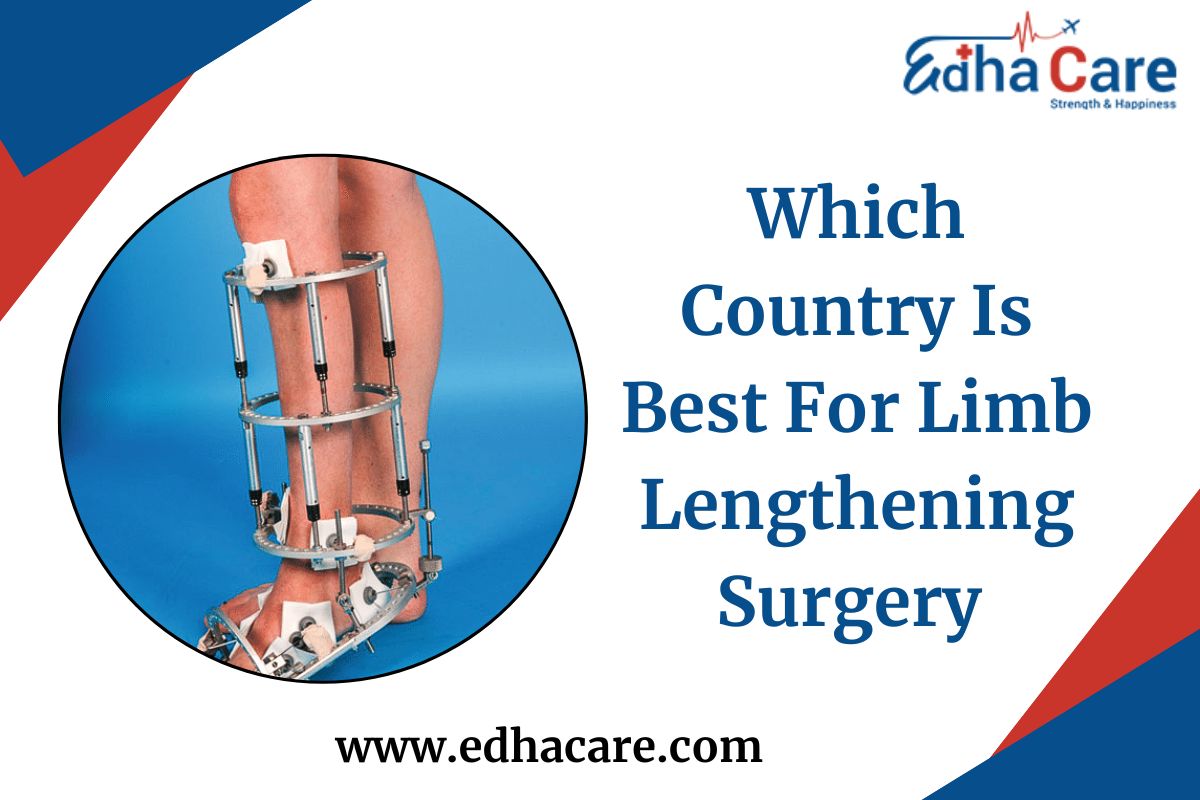
Limb lengthening surgery is used to increase height for someone who has also gained recent attention in recent years. The choice of the country and the medical facility carries utmost importance for individuals seeking this life-changing operation. This blog covers the factors one should consider while selecting a limb lengthening surgery destination, at the same time bringing into focus some of the leading countries renowned for this specialized procedure.
What Is Limb Lengthening Surgery?
Limb lengthening surgery gradually increases the length of the bone to correct discrepancies or growth problems. The key steps in the procedure are bone cutting, fixation of some devices for gradual length gain, and allowing new bone formation. Indications for the surgery may include limb discrepancies, growth faults, cosmetic outcomes, and limb salvage.
The process usually consists of osteotomy, fixation with an external or internal device, distraction to create a gap, bone regeneration with gradual lengthening, consolidation, and removal of the device. Recovery of this operation depends on the time of device removal, rehabilitation, weight-bearing, and follow-up care are paramount. Side effects include infection, pin-related problems, stiffness of a joint, nerve damage, and union failure in some unusual cases.
Key Factors to Consider When Choosing a Country:
Key factors to consider when choosing countries must be of utmost importance. After all, limb lengthening is an involved procedure, requiring a competent surgeon team and advanced facilities, such as health factors, technique, and rehabilitation for a successful outcome.
- Surgeon Expertise and Experience: Look for the experienced surgeon in the field of limb lengthening, specializing in the technique being considered (LON, PRECICE) or external fixation.
- Medical Facility and Technology: A state-of-the-art medical facility is required to carry out surgery using advanced imaging, surgical equipment, and rehabilitation facilities.
- Cost: Surgery for limb-lengthening costs vary widely across countries for surgery, hospitalizations, rehabilitation, and complications.
- Recovery and Rehabilitation: A very good recovery will not exist without post-operative care involving physiotherapy and pain management.
- Patient Safety and Regulations: Verify- does the country have stringent medical regulations and safety standards.
- Travel and Logistics: Look for the travel costs, visas, language barriers, and cultural differences.
- Patient Reviews and Testimonials: Online patient experiences allow one to put in perspective the quality of care and patient outcomes.
Top Countries Known for Limb Lengthening Surgery:
These are a few of the countries identified for their expertise in limb lengthening:
India:
India has been emerging as a premier venue for limb lengthening in medical tourism and has been a pioneer in offering options like external fixation at very economical prices. In major urban centers, many surgeons work in modern hospitals that can communicate in English.
Pros: Economical treatment options ($15,000-$40,000), highly skilled orthopedic surgeons, technologically advanced top-of-the-line hospitals, and good English-speaking support for easier communication.
Cons: Some hospitals may not be as luxurious as Western ones, so international patients may have to spend significantly longer recovering from their procedures.
[Visit to know more information]
Russia:
Russia has an illustrious limb-lengthening history pioneered by Dr. Gavriil Ilizarov. The Ilizarov method, based on external fixation, is most widely used now. Russian surgeons can manage even the complex cases very facilely. Though the prices are usually cheaper then the states, there could be a cultural and language barrier.
Pros: Affordable surgery (starting from $15,000), performed by experienced Ilizarov method surgeons, with high success rates in correcting deformities and enhancing height.
Cons: Language barriers may pose a problem in communication, affecting access to the newest medical technologies in some clinics.
Turkey:
Turkey has become quite an emerging hub of medical tourism with a fantastic price for limb lengthening and other advanced technologies. They also provide several fixation methods within these hospitals, as well as packages that cover accommodation and rehabilitation for European patients.
Pros: Affordable hospitals ($20,000-50,000) with well-experienced doctors within new facilities with highly advanced technology and significantly reduced waiting times.
Cons: Some polyclinics may not be to international standard, so results of the searching must be further reinforced on post-operative care quality.
[Visit to know more information ]
South Korea:
South Korea has advanced medical technology and highly qualified orthopedic surgeons who specialize in using methods such as PRECICE and LON. The nation offers excellent hospital treatment but the prices are high because of sophisticated medical care.
Pros: Advanced medical centers, expert surgeons, and superior rehabilitation services are responsible for delivering world-class patient care.
Cons: Prices accessible to medical tourists fall around $40,000 to $90,000 due to strict regulations.
United States:
Here, a patient can find the best in terms of top doctors and advanced medical technologies, with internal nails used for surgery and great post-op care. Expensive but great.
Pros: Highly experienced surgeons, cutting-edge medical technology, strict safety and hygiene standards, and thorough rehabilitation programs.
Cons: Height-increasing surgeries typically cost $70,000 to $150,000, usually not covered by insurance.
Germany
With advanced medical research and high standards in orthopedic surgery, Germany has monopolized all such fields. The hospitals in Berlin and Frankfurt have the most advanced technology and skillful specialists.
Pros: Trained surgeons perform all the latest medical procedures using the highest medical setup, resulting in high success rates and quick recovery.
Cons: The treatment is, however, expensive, although cheaper than treatment in the USA, which creates a problem for some international patients due to the language barrier.
Making a Choice For Limb Lengthening Surgery
Limb lengthening surgery in the right country holds much importance so thorough research and consultation with lots of surgeons are vital.
- Consult with multiple surgeons: Discuss your goals, medical history, and expectations.
- Request also detailed information: Inquire about the surgeon’s experience, surgery techniques, hospital facilities, and rehabilitation program.
- Read patient reviews and testimonials: Gain insights from other patients’ experiences. Survey costs.
- Consider all cost factors: Surgery, hospitalization, rehabilitation, travel, and any complications in the future.
- Look for safety and quality: Preferably, visit a hospital that is both reputed and houses experienced surgeons, not forgetting a good track record.
Conclusion:
When choosing a country for limb-lengthening surgery, personal priorities and special circumstances should be weighed. The experience of the surgeon, technology, cost, and post-operative care differ from one country to another. Countries such as Russia and India are cheaper alternatives with a lot of experience. South Korea and the USA offer a higher grade of technology. Turkey tends to be in the middle of the two, with modern facilities and pricing.
Investigate thoroughly. Insist on your surgeon’s qualifications, evaluate the options, consider all costs, keep safety in mind, and successfully reach a decision that culminates in a successful limb-lengthening surgery. Edhacare.com.