
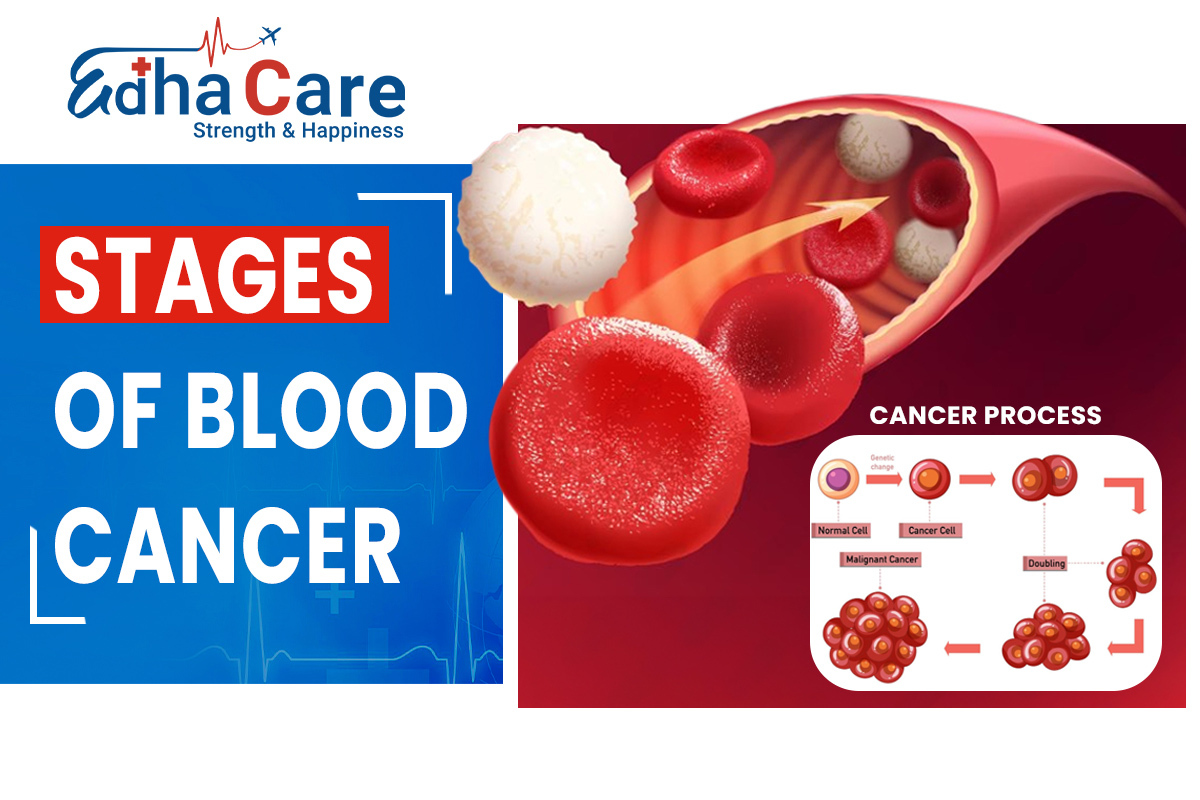
Blood cancer encompasses a group of malignancies affecting the blood, bone marrow, and lymphatic system, primarily including leukemia, lymphoma, and myeloma. These cancers are characterized by the uncontrolled growth of abnormal blood cells, which can disrupt normal blood function and affect the body’s ability to fight infections, control bleeding, and produce healthy blood cells. Understanding the stages of blood cancer is crucial for accurate diagnosis, effective treatment planning, and determining prognosis. It is important to note that staging criteria can differ significantly among the different types of blood cancers.
What is Blood Cancer?
Blood cancer refers to cancers that affect the components of blood, including red blood cells (RBCs), white blood cells (WBCs), and platelets. This category of cancer can disrupt the production and function of these vital blood components, leading to serious health issues.
The three main types of blood cancer are:
Leukemia
Leukemia originates in the bone marrow and leads to the overproduction of immature or abnormal white blood cells. There are several subtypes, including acute and chronic forms, which differ in their progression and treatment approaches.
Lymphoma
This is a cancer of the lymphatic system, which is a crucial part of the immune system. Lymphoma can be categorized into two main types: Hodgkin Lymphoma, characterized by the presence of Reed-Sternberg cells, and Non-Hodgkin Lymphoma, which encompasses a diverse group of blood cancers. The treatment and prognosis can vary widely between these subtypes.
Multiple Myeloma
This cancer specifically targets plasma cells. In multiple myeloma, abnormal plasma cells accumulate in the bone marrow and interfere with the production of normal blood cells, which can lead to various complications, including bone damage and kidney issues.
Each of these blood cancers has distinct characteristics, symptoms, and pathways for staging, which are critical for medical professionals when diagnosing and determining the best treatment strategy for patients.
Understanding these cancers not only helps in recognizing symptoms early but also emphasizes the importance of tailored treatments that can significantly improve patient outcomes.
What Are Stages of Blood Cancer and Why Do They Matter?
Cancer staging is a method used to determine the extent of cancer in your body. Oncologists utilize this system not only for diagnosis and treatment but also to aid researchers in studying treatment outcomes and potential cures. It can feel overwhelming to navigate a system filled with numbers and letters, but healthcare providers are there to clarify what it all means for you.
Why Stage Cancer?
Staging cancer is required for the following:
- Complexity of Cancer: Staging provides a common language for healthcare teams, facilitating better communication and coordinated care.
- Evolving Treatments: As treatment options change, staging offers a consistent starting point for healthcare providers.
- Understanding Prognosis: People diagnosed with cancer often want to know what to expect. Staging helps doctors estimate potential outcomes based on past experiences with similar cases.
- Supporting Research: Staging is crucial for clinical trials, enabling researchers to find participants with specific cancer types and stages.
How is Cancer Staged?
When staging cancer, doctors consider:
- Tumor size and growth
- Tumor location
- Whether the cancer has spread
Here is a simplified view of cancer stages:
- Stage 0: Abnormal cells present, but they haven’t spread; often curable.
- Stage I: Small tumor contained in one area, no spread to lymph nodes.
- Stage II: A larger tumor that may have spread to nearby lymph nodes.
- Stage III: The tumor has invaded nearby tissues and may have spread to lymph nodes.
- Stage IV: Cancer has spread to distant organs; known as metastatic cancer.
Breaking Down Stages Further:
Stages may also use letters (A, B, C, D) to indicate how aggressive the cancer is, with A representing slower-growing tumors and D indicating more aggressive forms.
Location-Based Staging:
- In situ: Abnormal cells that haven’t spread
- Localized: Cancer is present but remains in the primary site
- Regional: Cancer has spread to nearby tissues or lymph nodes
- Distant: Cancer has moved to distant areas of the body
- Unknown: Insufficient information to stage the cancer
TNM Staging:
A common method that evaluates:
- T: Size of the primary tumor
- N: Spread to nearby lymph nodes
- M: Metastasis to other parts of the body
Different cancers may use specific staging systems, such as the Lugano for lymphomas or FIGO for gynecological cancers. Talk to your oncologist about the staging system they use so they can provide more clarity on your diagnosis.
Stages of Blood Cancer
Blood cancer staging follows different criteria than other types of cancer because blood cancers don’t typically form into solid tumors.
Each type of blood cancer uses a slightly different staging system. Blood markers and patient symptoms are the foundations of each stage.
Stages of Leukemia
Leukemia staging is different from cancers that develop solid tumors. While each type of leukemia staging is based on the individual type of leukemia, the most common method is the Rai system and Binet classification method.
The Rai classification is broken into the risk groups below.
- Stage 0: Low risk
- Stages 1 and 2: Intermediate risk
- Stages 3 and 4: High risk
Each case is unique. A patient’s medical team may address questions about staging and what it means for individual health outcomes.
Stages of Lymphoma (Hodgkin & Non-Hodgkin)
Lymphoma staging determines the occurrence and extent of cancer spread. Staging helps doctors customize treatment plans for each patient, and it may help predict their prognosis.
Lymphoma staging is based on the spread of cancer to the lymph nodes.
- Stage 1: Cancer present in only one area of lymph nodes or one organ
- Stage 2: Cancer present in two or more lymph node regions on the same side of the diaphragm
- Stage 3: Cancer present in multiple lymph node areas, on both sides of the diaphragm
- Stage 4: Cancer spreads outside the lymph nodes to at least one other organ, most often the lungs, liver, or bone marrow
Additional classifications may be added to each stage, depending on whether or not the patient has certain symptoms and if their cancer is recurrent, meaning it has come back after remission.
Stages of Multiple Myeloma
Multiple myeloma is staged based on multiple factors, according to the Revised International Staging System (R-ISS).
Stage 1 Multiple Myeloma
The R-ISS features to classify a patient with stage 1 myeloma are:
- Beta-2 microglobulin below 3.5 mg/L
- Serum albumin level of 3.5 g/dL or greater
- Cytogenetics (specific gene abnormalities) are not considered high-risk
- Lactate dehydrogenase at normal levels
Stage 2 Multiple Myeloma
According to the R-ISS, the following feature defines stage 2 myeloma:
- The patient’s characteristics don’t fall into stage 1 or stage 3
Stage 3 Multiple Myeloma
Stage 3 is the highest myeloma stage. The R-ISS features to classify a patient with stage 3 myeloma are:
- Beta-2 microglobulin is 5.5 mg/L or greater
- Cytogenetics is considered high-risk, and/or high lactate dehydrogenase levels are observed
Stage 0 Multiple Myeloma
Only active myeloma is assigned using stages 1 through 3. If a patient has asymptomatic myeloma, the care team may describe it as being stage 0 multiple myeloma. This myeloma type has the following features:
- Normal blood counts, calcium levels, and kidney function
- No noticeable damage to organs or bones
- Serum monoclonal protein of 3 g/dL or higher and/or 10% to 60% of all cells in bone marrow are plasma cells
Prognosis and Survival Rates by Stages of Blood Cancer
Prognosis and survival rates vary significantly by stages of blood cancer. Generally, early-stage cancers have a more favorable outcome compared to those diagnosed at an advanced stage. However, it is essential to recognize that survival chances are influenced by multiple factors, including the type of cancer, the disease stage, the patient’s age, and overall health status. Young, healthier patients often respond better to treatments and have improved survival rates compared to older patients or those with other health issues. Additionally, patients’ response to treatment can greatly affect the overall prognosis, emphasizing the need for tailored therapy and close monitoring.
Conclusion
In conclusion, knowing the stages of blood cancer is a crucial component in its management. It greatly impacts treatment decisions and potential outcomes. Early diagnosis and regular follow-ups can enhance patient survival and quality of life. If you or someone you know is experiencing symptoms or seeking a second opinion, consult with EdhaCare. Early intervention can lead to significantly better outcomes in the fight against blood cancer.