
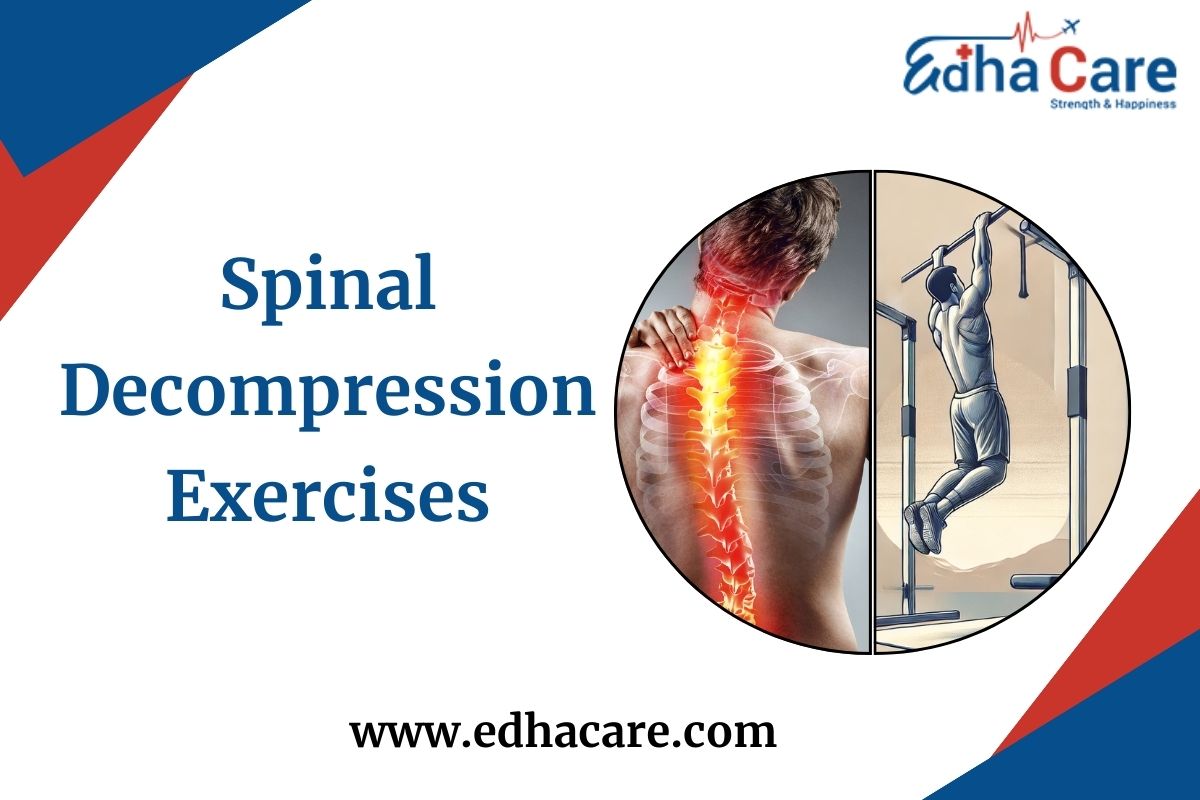
Today, the most common ailment is back pain, which has afflicted the lives and bodies of millions of people around the world. Posture, injury, or degenerative disc disease contribute to chronic back pain. There are numerous treatments for back pain; however, the most prominent and noninvasive effective approach to relieving back pain is through spinal decompression exercises. In this blog, we look at some information that guides us for a better understanding.
What is Spinal Decompression?
The technique of spinal decompression entails the gentle application of traction to the length of the spine to relieve pressure on the discs and nerves. Manual traction, inversion therapy, or the use of specialized mechanical equipment can all be utilized for spinal decompression. Spinal decompression:
- Lowers compression on the juicy discs for healing and rehydration.
- Diminishes compression on some pinched nerves-associated pain and inflammation.
- It enhances blood circulation to the spine, thus allowing healing and reducing stiffness.
- Restores the ideal structural and positional alignment of the spine, hence improving posture and reducing the chances of future injuries.
Benefits of Spinal Decompression Exercises
Spinal decompression exercises provide various benefits to patients with back pain. Some of the benefits include:
- Pain Relief: Spinal decompression exercise will reduce the pressure on discs and nerves, ultimately spending significant time reducing higher back pain.
- Improved Mobility: Regular spinal exercises can help improve movement flexibility and range of motion in the spine.
- Non-surgical: Not like spine surgery or injections, spinal decompression exercises are a noninvasive treatment option with minimal risk.
- Convenient: These exercises can be performed and practiced in the comfort of your home with little equipment; therefore, they are very convenient for many people’s practices.
- Long-term Relief: If practiced regularly, the spinal decompression exercises are excellent in the long-term prevention of future back pain and promoting cure.
Types of Spinal Decompression Exercises
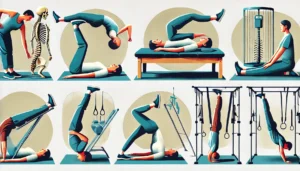
There are several types of spinal decompression exercises that you can do at home, including:
- Pelvic tilts: Lie on your back with your knees bent and feet flat on the floor. Gently tilt your pelvis forward and backward, feeling your back arch and flatten against the floor.
- Knee-to-chest stretches: Lie on your back with your knees bent. Pull one knee towards your chest, holding it for 15-30 seconds. Repeat with the other knee.
- Cat-cow stretches: Begin in a hands-and-knees position. Arch your back as though you are a cat while also bringing your head downward by tucking your chin to your chest. Then, drop your belly and lift your head, looking up like a cow.
- Side stretches: Stand with your feet about shoulder-width apart. Stretch one arm out and above and bend to the side; you can feel the stretch along the side and back. Repeat on the opposite side.
- Inversion therapy: Hang upside down from an inversion table so that gravity decompresses your spine. Start with shorter durations, gradually increasing to get you used to it.
Tips for Performing Spinal Decompression Exercises
- Start with a few repetitions of each exercise and build up your strength gradually till you reach the desired amount.
- If something feels painful, then the exercise should not be continued, and you should rest.
- Do those exercises almost every day for effective results.
- Here, you should look into techniques for doing the exercise to minimize injuries.
- If you have any ongoing medical conditions, talk to your doctor before starting exercises.
If we ask about who can benefit from Spinal decompression exercises. The answer is that it can be useful to many patients with back problems, including those with herniated discs, degenerative disc disease, spinal stenosis, sciatica, chronic backache, muscle strains, and after scoliosis spine surgery.
When to Avoid Spinal Decompression Exercises
For spinal decompression exercises, certain conditions might warrant their avoidance: Early pregnancy, Advanced osteoporosis, Instability of the spine, Early recovery from a spine operation, Sharp pain in the spine, and any condition where it is unsafe to perform any range of motion involving stretching or twisting of the spine.
Additional Treatments for Back Pain
Several treatment alternatives for back pain are practiced apart from spinal decompression exercises, like:
- Physical therapy
- Chiropractic management
- Acupuncture
- Massage therapy
- Medication
- Injections
- Surgery
Conclusion
Undoubtedly, spinal decompression exercises are fairly safe and good for managing back pain and spinal health. If practiced regularly and with precision, these exercises reduce pressure on the discs and nerves, facilitate blood circulation, and restore normal spinal alignment. Consult your physician about these exercises to alleviate back pain. I hope the article was enjoyable for you. We appreciate your interest in Edhacare.com.