
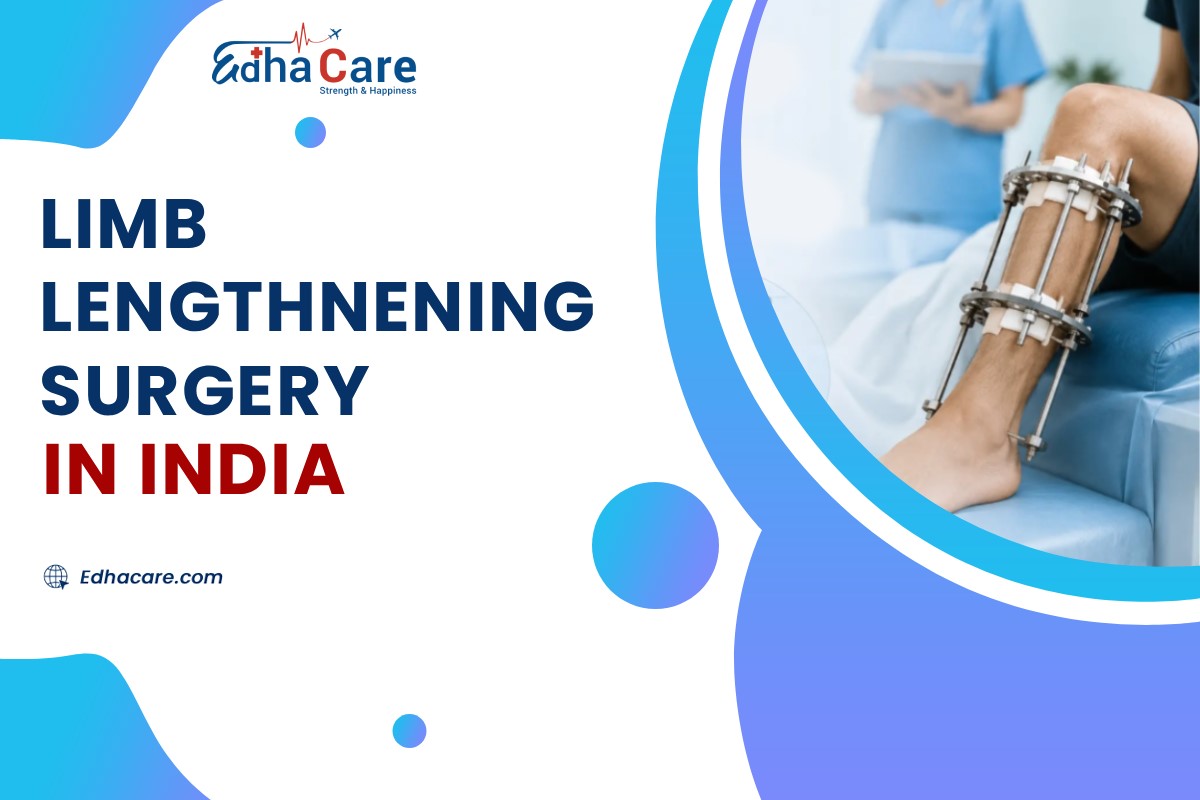
It is a trusted option for international patients looking for advanced orthopedic care at an affordable cost. Limb lengthening surgery in India helps correct limb length differences, bone deformities, injury-related shortening, growth disorders, and selected adult height improvement cases after proper medical evaluation.
India is preferred for experienced orthopedic surgeons, modern devices, advanced hospitals, and structured rehabilitation support. With EdhaCare, patients also get complete assistance with online doctor opinions, hospital selection, treatment cost estimates, medical visa support, airport pickup, accommodation guidance, dedicated patient care coordination, and follow-up care.
What is Limb Lengthening Surgery?
This surgery is a specialized orthopedic procedure used to increase the length of a bone in the leg or arm, most commonly the femur, which is the thigh bone, or the tibia, which is the shin bone.
The surgery works by using the body’s natural ability to create new bone. During the procedure, the orthopedic surgeon carefully cuts the bone and places a lengthening device, which slowly separates the two bone segments after a short healing period. As the gap opens gradually, the body begins forming new bone tissue in between. This process is known as distraction osteogenesis.
The lengthening is usually done slowly, often around 1 mm per day, depending on the patient’s condition and the surgeon’s plan. This gradual process is important because the bone, muscles, nerves, blood vessels, and skin all need time to adjust safely.
Who Can Consider this Surgery?
This surgery may be advised for patients who have a significant limb length difference or bone deformity that affects movement, posture, comfort, or quality of life.
Common reasons include:
- Congenital limb shortening
- Growth plate injury during childhood
- Old fracture that healed in a shortened position
- Bone infection affecting growth
- Polio-related limb shortening
- Cerebral palsy-related deformity
- Leg length difference after trauma or surgery
- Selected adult height improvement cases after medical assessment
A detailed orthopedic evaluation is necessary before deciding whether this is the right treatment.
How Does the Surgery Work?
It is not an instant result procedure. It is a gradual treatment that requires planning, patience, regular follow-up, and physiotherapy.
First, the doctor evaluates the patient’s medical history, walking pattern, limb alignment, muscle strength, and joint movement. X-rays or scans are used to measure the exact limb length difference and plan the surgery.
During the procedure, the bone is carefully cut and a lengthening device is placed either inside the bone, outside the limb, or through a combined method. After a short healing period, the device is adjusted slowly so the bone segments move apart little by little.
As the gap opens, the body naturally starts forming new bone. Once the required length is achieved, the new bone is allowed to become strong and solid. Physiotherapy continues throughout recovery to reduce stiffness, improve strength, and help the patient walk safely again.
Types of Limb Lengthening Techniques in India
In India, doctors choose the technique based on the patient’s condition, bone quality, treatment goal, and budget.
External Fixator:
This is a frame placed outside the limb and attached to the bone with pins or screws. It is gradually adjusted to lengthen the bone and is often used in complex deformity correction cases.
Internal Lengthening Nail:
This device is placed inside the bone, making it more comfortable and less visible than an external frame. It may allow easier movement in selected patients, but it usually costs more.
Combined Technique:
In complex cases, doctors may use both internal and external methods, especially when limb lengthening is needed along with deformity correction or alignment improvement.
The best technique is decided after the orthopedic surgeon reviews the patient’s reports, X-rays, and treatment goals.
Limb Lengthening Surgery Cost in India
The cost of this procedure in India depends on the hospital, surgeon, implant or device used, number of bones treated, lengthening goal, hospital stay, physiotherapy, and total recovery plan.
In India, the cost may start from around USD 8,000 for selected basic cases. However, advanced internal nail procedures, bilateral cases, deformity correction, or height improvement cases may cost more because they require specialized devices, detailed planning, and longer follow-up.
The final package can only be confirmed after the orthopedic surgeon reviews the patient’s X-rays, medical history, and treatment requirements.
Recovery After Surgery
Recovery after the surgery is gradual and needs patience. Most patients may need crutches, a walker, or a wheelchair for some time, depending on the doctor’s weight-bearing instructions.
The recovery period can take around 6 to 12 months, and sometimes longer in complex cases. It depends on the amount of lengthening, bone healing, age, nutrition, physiotherapy, and overall health.
During recovery, patients should attend follow-ups, get X-rays as advised, continue physiotherapy, keep the surgical area clean, take medicines on time, eat well, avoid smoking and alcohol, and report any unusual pain, swelling, fever, numbness, or color change immediately.
Physiotherapy should not be skipped. It plays a major role in preventing stiffness and helping patients return to walking safely.
Success Rate and Possible Risks
In well-selected patients, limb lengthening surgery can have a success rate of around 95%, especially when performed by an experienced orthopedic team and followed by proper physiotherapy and regular monitoring.
Like any major surgery, it may involve risks such as infection, pain, stiffness, delayed bone healing, or implant-related issues. Careful planning, expert medical care, and disciplined rehabilitation help reduce these risks.
How Long Should International Patients Stay in India?
International patients usually need to plan a stay of around 3 months for Limb Lengthening treatment in India, depending on the procedure, recovery progress, and surgeon’s advice.
This stay generally includes the first consultation, medical tests, surgery, hospital admission, early recovery, physiotherapy sessions, follow-up X-rays, and travel fitness clearance. After returning home, patients can continue follow-up online with their treating doctor.
In complex cases, a longer stay in India may be required for safe recovery and better results.
Why Choose India for Limb Lengthening Surgery?
India offers a strong combination of medical expertise, advanced technology, and affordable care. Many hospitals in India regularly treat international patients and understand their needs, including language support, food preferences, travel planning, visa documentation, accommodation, and family assistance.
International patients choose India because of:
- Experienced orthopedic and limb reconstruction surgeons
- Modern external and internal lengthening devices
- Affordable treatment packages
- Advanced hospital infrastructure
- English-speaking medical teams
- Shorter waiting time
- Rehabilitation and physiotherapy support
- Dedicated international patient services
- Complete medical travel coordination
Many patients choose this treatment for more than just its lower cost. It is the ability to receive specialized treatment with proper support from consultation to recovery.
How EdhaCare Helps International Patients
Planning limb lengthening surgery in India becomes easier with EdhaCare’s step-by-step support:
- Share Your Medical Reports
Send your X-rays, medical history, and treatment concerns to EdhaCare for case review. - Get Expert Doctor Opinion
We help connect you with experienced orthopedic specialists in India for a medical opinion. - Compare Hospitals and Cost
Based on your case, we share suitable hospital options, doctor recommendations, and an estimated treatment cost. - Plan Your Medical Travel
EdhaCare assists with medical visa invitation letters, appointment scheduling, airport pickup, accommodation guidance, and interpreter support if needed. - Get Treatment in India
Our team helps coordinate hospital admission, consultations, surgery, physiotherapy, and follow-up visits. - Continue Follow-Up After Returning Home
After treatment, EdhaCare supports online follow-up with the treating doctor so your recovery stays on track.
With EdhaCare, international patients can focus on treatment and recovery while our team manages the medical travel coordination.
Frequently Asked Questions
Is this surgery only for medical conditions?
Doctors primarily perform this surgery to treat limb length differences, correct deformities, and restore length lost due to injuries.
Is the surgery painful?
Patients usually experience some pain and discomfort during the early recovery and lengthening phase. Doctors help manage pain with medications and physiotherapy throughout the recovery process.
How much length can you gain
The amount of safe lengthening depends on each patient’s bone health, age, and overall medical condition. Doctors recommend realistic lengthening goals to reduce complications (Usually upto 8 cms)
Can I walk after surgery?
Patients usually need walking support in the early phase. Walking improves gradually with bone healing, physiotherapy, and doctor-guided weight-bearing.
Conclusion
Limb Lengthening Surgery can help patients with limb length differences, deformities, mobility issues, or selected height-related concerns. With experienced orthopedic surgeons, advanced devices, and structured rehabilitation, India offers quality treatment at a more affordable cost for international patients.
EdhaCare helps you choose trusted doctors, compare hospitals, understand treatment costs, and plan your complete medical journey with confidence.
Your journey to improved mobility, balance, and confidence starts with the right medical guidance. EdhaCare is here to help.
Medical Disclaimer
This blog is for general information only and should not replace consultation with a qualified orthopedic surgeon. Treatment suitability, cost, recovery time, success rate, and outcomes vary from patient to patient.