
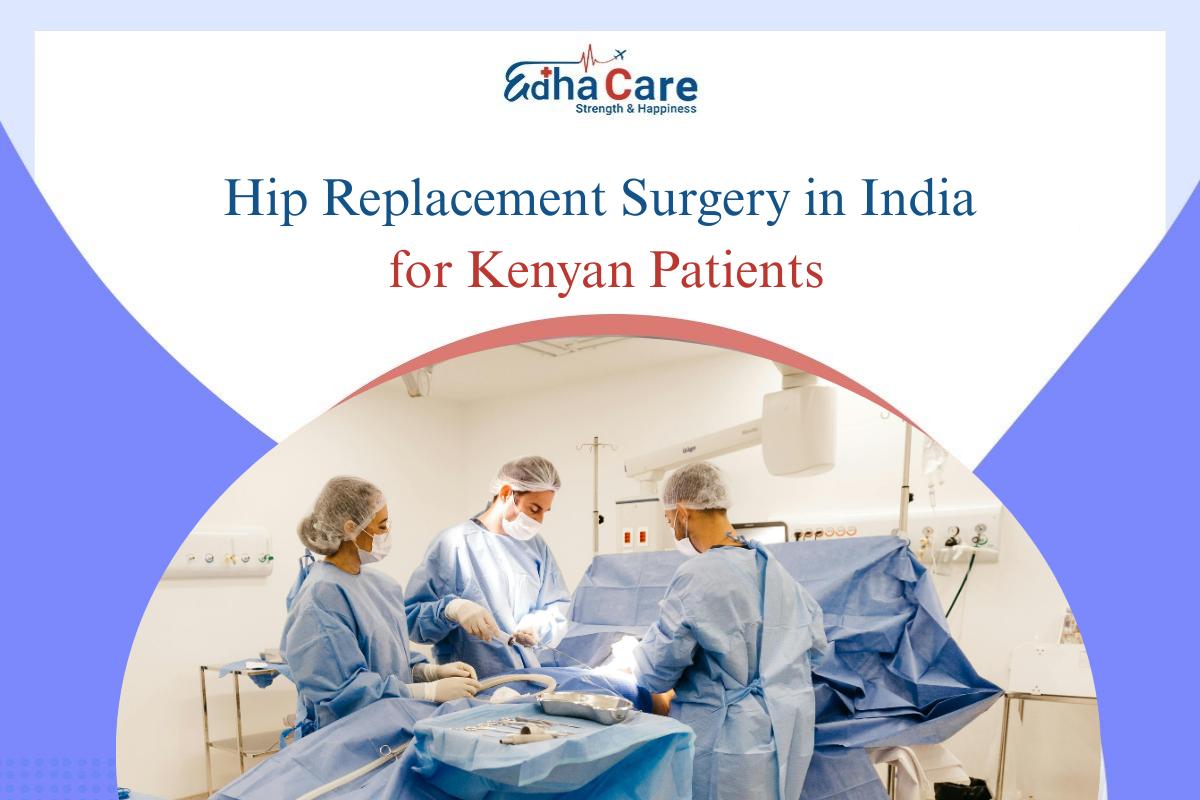
Hip replacement surgery is an orthopaedic procedure that significantly improves a patient’s quality of life by relieving chronic hip pain and restoring mobility in cases of severe joint damage. In Kenya, access to advanced orthopaedic care, highly skilled joint replacement surgeons, and modern rehabilitation facilities remains limited. Patients often face long waiting times, high private healthcare costs, and delays in obtaining advanced implants.
As a result, India has become the preferred destination for Kenyan patients seeking hip replacement surgery that is safe, affordable, and high-quality. Indian hospitals offer world-class facilities, orthopaedic surgeons trained internationally, and structured support for international patients, ensuring a seamless treatment experience without compromising results.
Why Kenyan Patients Prefer India?
- Personalized Care: Indian hospitals practice patient-oriented treatment, customizing the surgery and recovery plans according to the individual needs of each Kenyan patient.
- Comprehensive Rehabilitation: Post-operation physiotherapy and rehabilitation programs are systematically organized, thereby facilitating quick and safe recovery of the patients’ mobility.
- International Patient Assistance: The hospitals along with EdhaCare provide complete and uninterrupted support, comprising travel arrangements, language assistance, and accommodation, thus turning a medical journey into a hassle-free experience.
- Access to Latest Implants: The patients are supplied with the best quality, imported hip implants which are strong and specifically designed for long-term use.
- Minimal Waiting Time: On the contrary to Kenya, where patients can be waiting for months to get surgery, the Indian hospitals often carry out the procedures very quickly in order to reduce the delays and suffering.
- Global Accreditation: The majority of the hospitals possess international accreditations such as JCI and NABH, which are indications of the fact that the treatment is in compliance with worldwide safety and quality standards.
What Is Hip Replacement Surgery?
Hip replacement surgery involves removing a damaged or dysfunctional hip joint and replacing it with a prosthetic implant made of metal, ceramic, or high-grade plastic.
Who Needs It?
- People suffering from extreme cases of osteoarthritis or rheumatoid arthritis
- People who have had a hip fracture
- People complaining of persistent pain and withdrawal from activities
When Is It Recommended?
The operation is recommended when the non-surgical methods have not been successful in relieving the Pain or restoring the range of motion.
Types of Hip Replacement Available in India for Kenyan Patients
- Total Hip Replacement (THR) Replacement of the complete hip joint
- Partial Hip Replacement: Only the part of the joint that is damaged is replaced
- Bilateral Hip Replacement: Either both hips are replaced at once or they are done in two separate sessions
- Minimally Invasive Hip Replacement: Smaller cuts which mean a quicker recovery and less pain
- Computer-Assisted & Robotic-Assisted Surgery: Guarantees accurate implant placement and durability for a long time
Cost of Hip Replacement Surgery in India for Kenyan Patients
The cost of hip replacement surgery in India for Kenyan patients typically ranges from USD 4,000 to USD 7,000 per hip (approximately ₹3,30,000 to ₹5,80,000).
What Is Included?
- Surgeon and hospital fees
- Charges for anaesthesia and operating room Hospital room, nursing care Cost of the implant Physio and medicines for the first time
Factors Affecting Cost
- Prosthesis type
- Surgical method and approach Hospital location and facilities
- Patient’s health condition and recovery requirements
Cost Comparison for Hip Replacement Surgery
- India: USD 4,000 – 7,000
- Kenya: Limited availability; often high private costs
- Turkey: USD 8,000 – 12,000
- Europe / USA: USD 25,000 – 40,000
Best Hip Replacement Hospitals in India for Kenyan Patients
Apollo Hospitals (Delhi, Chennai, Hyderabad, Bengaluru)
- Accreditation: NABH, JCI
- Expertise: High-volume hip & knee replacements, complex surgeries
- Facilities: Advanced operating theaters, robotic & computer-assisted surgery, international patient services
Medanta – The Medicity (Gurugram)
- Accreditation: NABH, JCI
- Expertise: Specialized joint replacement institute
- Facilities: State-of-the-art infrastructure, rehabilitation center, multidisciplinary ICUs
Fortis Memorial Research Institute (Gurugram)
- Accreditation: NABH, JCI
- Expertise: Primary & revision hip replacements with high success rates
- Facilities: Modern ICUs, minimally invasive surgery units, advanced imaging
Max Super Speciality Hospital (Delhi)
- Accreditation: NABH, NABL
- Expertise: Comprehensive joint replacement services
- Facilities: Robotic surgery systems, next-generation operating theaters, patient-friendly recovery units
Manipal Hospitals (Bengaluru, Delhi, Gurugram)
- Accreditation: NABH, NABL
- Expertise: Advanced hip replacement programs
- Facilities: High-end surgical infrastructure, integrated physiotherapy & rehab centers
Top Hip Replacement Surgeons in India for Kenyan Patients
Dr. Hitesh Garg – Orthopedic Surgeon, Artemis Hospital, Gurugram
- Experience: 15+ Years
- Key Expertise: 5,000+ joint replacements, minimally invasive techniques
Dr. Tanna D. D. – Orthopaedic Surgeon, Jaslok Hospital, Mumbai
- Experience: 55 Years
- Key Expertise: Muscle release, functional orthopaedics, ligament reconstruction; multiple national & international publications
Dr. Ashok Rajgopal – Orthopedic Surgeon, KIMS Global Hospital, Trivandrum
- Experience: 44 Years
- Key Expertise: Pioneer of virtual total knee replacement using patient-specific instruments
Dr. Neeraj Srivastava – Orthopedic Surgeon, Fortis Hospital, Mumbai
- Experience: 42 Years
- Key Expertise: Joint replacement and complex orthopaedic procedures
Dr. Avtar Singh – Orthopedic Surgeon, Max Hospital Shalimar Bagh, Amritsar
- Experience: 40+ Years
- Key Expertise: Joint disorders, fractures, and musculoskeletal injuries
Treatment Process for Kenyan Patients
- Pre-Surgery Health Assessment: An extensive assessment of general health is done to make sure that the patient is ready for the operation.Blood tests, X-rays, and scans are done to determine the surgical plan.
- Customized Surgical Planning: Choosing the best implant type and surgical method.Customized plan to reduce pain and speed up recovery.
- Accommodation & Support Services: Help with finding a pleasant place to stay close to the hospital.Using language interpreters and local guides to ensure the stay is not stressful.
- Post-Surgery Pain Management: State-of-the-art pain management methods for a gentle recovery.Nurses and physical therapists will be monitoring you regularly.
- Rehabilitation & Physiotherapy: The patients will undergo a systematic program of exercises to get their mobility back and also to make their muscles stronger. Physiotherapy will be provided during the hospital stay and after the discharge.
- Nutrition & Lifestyle Guidance: Customers will receive diet plans and lifestyle tips to support healing and promote the longevity of joints.
- Remote Follow-Up Support: Videoconferencing for the recovery that continues after coming back to Kenya. Assistance with exercise, implant maintenance and activity modifications.
- Emergency Assistance: Around-the-clock assistance is available for any post-operative issues that may arise while in India. Specialists in the hospital will be available to you in case there are any complications.
How EdhaCare Assist Kenyan Patients?
EdhaCare, a leading medical tourism company in India, provides comprehensive medical tourism services, including:
- Free medical case evaluation
- Selection of top hospitals and surgeons
- Medical visa and travel assistance
- Accommodation arrangements
- Post-treatment follow-up after returning to Kenya
Frequently Asked Questions
- Who is a good candidate for hip replacement?
Patients with severe arthritis, hip fractures, or chronic pain that limits daily activities are typically considered. - How long will I stay in the hospital for hip replacement surgery?
Hospital stay usually ranges from 5 to 7 days, depending on your recovery progress. - Will I need physiotherapy after hip replacement surgery?
Yes, physiotherapy is essential to restore strength, flexibility, and full mobility. - Can hip replacement improve my quality of life?
Absolutely, it reduces pain, restores mobility, and helps patients regain independence. - Do I need someone to assist me after hip replacement surgery?
In the initial days, having a caregiver helps with walking, daily tasks, and safety at home.
Conclusion
Hip replacement surgery can restore mobility, independence, and quality of life. For Kenyan patients, India provides the ideal combination of affordability, expertise, and advanced care.
If you or a loved one is considering hip replacement surgery, contact EdhaCare today for a free consultation, personalized treatment plan, and full support throughout your medical journey in India.
Medical Disclaimer
This content is for informational purposes only and should not replace professional medical advice. Patients should consult qualified healthcare professionals before making treatment decisions.