
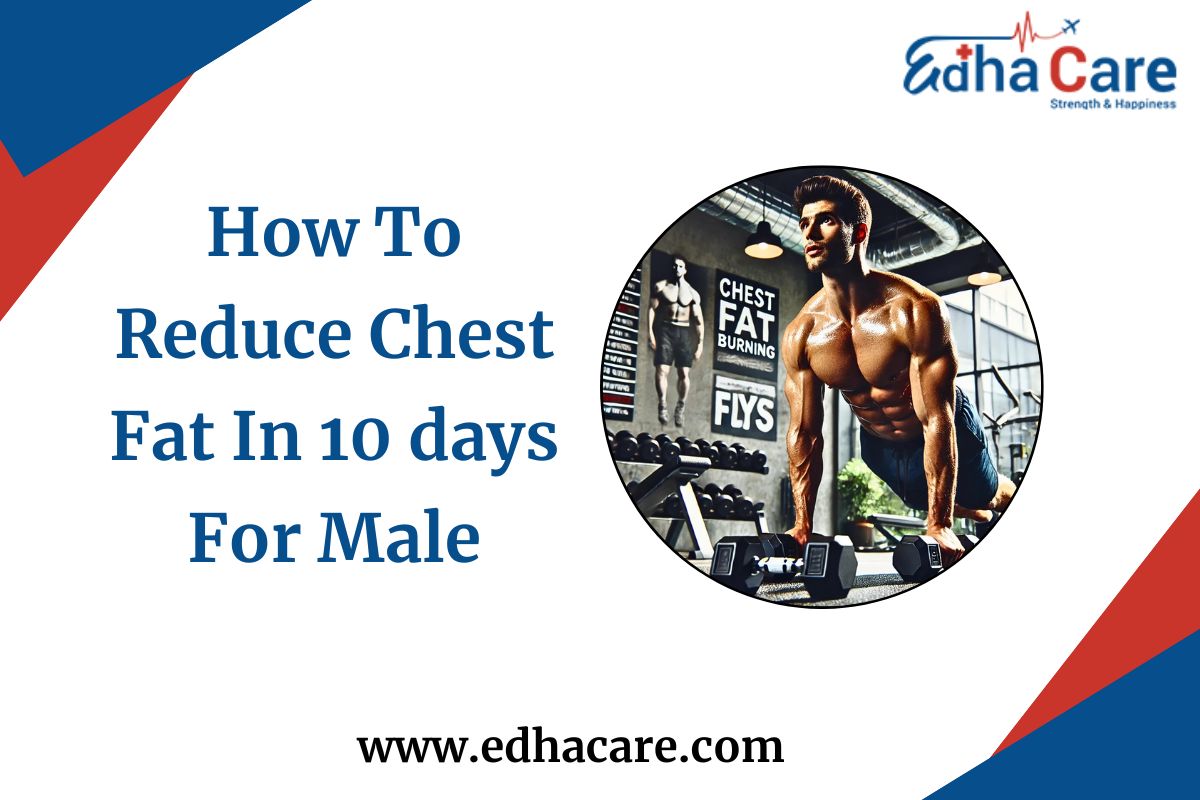
Fat deposited in the chest area is commonly termed “man-boobs” or, medically known as gynecomastia. It involves glandular tissue, which indeed becomes a cause of great insecurity for many men. Although spot reduction (loss of fat from one specified area) is not scientifically possible, one can generate a calorie deficit and exercise to lose body fat, including some chest fat, in a relatively short time. In this blog, we try to discuss “how to reduce chest fat in 10 days for a male.” The 10-day guide will give a structured approach that combines diet, exercise, and lifestyle changes, thus enabling the reader to see some noticeable results.
Why Do Men Get Chest Fat?
Genetic predisposition is one factor that determines fat deposition. Certain men tend to accumulate fat in the chest region. In some cases, hormonal imbalances promote gynecomastia. If you feel that a hormonal problem may be present, please speak with your physician. Drugs may cause weight gain or fluid retention. However, losing weight from the body or chest is tiring. Just be sure to be working at this all the time, being consistent while perhaps not seeing results sooner than later. This 10-day duration is indeed insignificant; you would see some changes within this time, but some major alterations would take a longer period.
Understanding the Basics:
In a nutshell, the only way to reduce chest fat is to maintain a calorie deficit, which is when one burns more food energy than is consumed. This is bad for the body, leading to increased fat absorption. When combined with straining exercises, a calorie deficit will help develop some bone structure in the chest and carve a comparatively toner appearance.
The 10-Day Plan To Lose Chest Fat :
Rapid fat loss is precarious, and not everyone will sustain such initial losses. Where to begin to reduce chest fat in 10 days? Here are some pieces of advice for men.
Day 1-3 (Dietary Overhaul and Foundation Building)
- Start with Basal Metabolic Rate (BMR) and Total Daily Energy Expenditure (TDEE) calculations. Have a moderately-caloric deficit between 500 and 750 calories. Use any free online calculator or consult a qualified nutritionist.
- Optimally, increase protein intake to minimize muscle loss with fat loss. Target for at least 1 gram of protein per pound of body weight. Excellent food sources are lean meats, poultry, fish, eggs, Greek yogurt, and other plant-protein sources.
- Put down the sugary drinks, processed snacks, and fast food. All these items contribute nothing but excess calories with very low nutritional value.
- Fill the plate with whole, unprocessed foods such as fruits, vegetables, whole grains, and lean proteins.
- Drink plenty of water throughout the day. It suppresses appetite, assists in digestion, and aids fat loss.
- Practice regular, incline, and wide-grip push-ups for 3 sets of 10-15 repetitions each.
Day 4-7 (Intensifying Exercise and Refining Diet)
- Include resistance training for muscle building and speeding metabolism with exercises like Bench Press (3×8-12 reps), Dumbbell flies (3×10-15 reps), and Incline Dumbbell Press (3×8-12 repetitions).
- Include HIIT workouts at least twice a week in your routine. HIIT can burn more calories in a short time than any steady-state cardio method. Examples of HIIT exercises include sprints, burpees, and jumping jacks.
- Look closely at portion sizes so that you remain in your calorie deficit. You may need to use measuring cups and food scales at times to do this.
- Fiber keeps you satisfied while aiding healthy digestion. Include fiber-rich foods such as leafy greens, broccoli, and whole grains in your diet.
- Historically, excess sodium creates water retention, causing you to feel bloated at times.
Day 8-10 (Fine-Tuning and Maintaining Momentum)
- Include some active recovery days with light cardio or stretching to promote muscle recovery and reduce soreness in muscles.
- Review your development and adjust your diet and workout routine.
- Strive for quality sleep, ranging between 7 and 9 hours nightly. Sleep deprivation would mess up hormones and hinder fat loss.
- Chronic stress increases cortisol levels in the body and therefore favors fat storage; hence, reduce stress levels through meditation, yoga, and deep breathing.
- Continue keeping your healthy lifestyle even after that 10-day challenge to prevent regaining fat and maintain your results.
- Progressive overload doesn’t stop in weight training. It could either be lifting heavier weights or performing more repetitions over time.
Surgical Method:
The various surgical techniques for chest fat removal from men would include approaches such as liposuction, excision, or mastectomy. The choice of method would depend on factors such as the cause of fat, the amount of tissue, and patient anatomy. There are specific steps regarding techniques, such as incision making, fat removal, excision of glandular tissue, possible nipple repositioning, and anesthesia. Individual discomfort between patients has given rise to the doctor’s advisory – best based on an individual since the results would vary from one person to another.
Future Goals:
The 10-day plan to reduce chest fat for male is just the beginning. To maintain and build on these results, however, you will be mostly adopting habits for a healthy lifestyle with:
- A balanced diet but mostly that which contains whole food.
- Regular exercise involving both strength and cardio training.
- Adequate sleep and stress management.
- Regularly monitoring for consistent performance results.
Conclusion
Reduction of chest fat can be facilitated through a combined pattern of special exercises, a calorie deficit, and healthy lifestyle habits, leading to a more toned and confident physique. Consult a health worker or certified personal trainer for guidance and personalized support. We truly hope this article helps you. Glad we can help you- Edhacare.com.