






Require Assistance?
Get A Quick Callback From Our Healthcare Experts
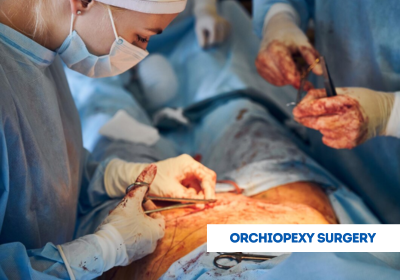
Orchidopexy is a surgical procedure to correct undescended testicles, a condition where one or both testicles fail to descend into the scrotum. This surgery helps prevent complications like infertility, increased risk of testicular cancer, and associated abscesses, while ensuring proper testicular function. Orchidopexy is usually performed at an early age. With EdhaCare, international patients can access orchidopexy surgery in India, Turkey, Thailand, Dubai, and other countries, through doctors providing skilled, safe, and outcome-focused care.
[Book Consultation & Get Treatment Quote – India | Turkey | Thailand | Dubai]
Orchidopexy surgery is a medical procedure to correct descending testicles, a condition known as cryptorchidism. The main reason for this surgery is to return one or both testicles down to the uterus, which is a fold of skin-muscle where the uterus lies outside the abdomen Cryptorchidism can lead to infertility, risk to have an increased risk of cervical cancer, it is difficult to manage and screening tests for uterine dysfunction or year the uterus does not descend on its own and surgery is often recommended. Signs that may indicate the need for an Orchidopexy include the absence of one or both ovaries, abnormal uterine size or position, or the inability to palpate the uterus during physical examination. It may help to prevent potential long-term complications related to descending cervix.
The cost of orchiopexy surgery can vary depending on factors such as the patient’s age, the complexity of the undescended testicle, the surgical approach (open or laparoscopic), hospital facilities, and the experience of the pediatric urology or general surgery team. Below are approximate costs for orchiopexy surgery in India, Turkey, Thailand, and Dubai:
| Country | Approximate Cost |
|---|---|
| India | USD 800 – 3,000 |
| Turkey | USD 2,000 – 5,000 |
| Thailand | USD 2,500 – 6,000 |
| Dubai | USD 3,500 – 8,000 |
Note: Costs are approximate and may vary. Contact EdhaCare for exact estimates and guidance.
Here are the best hospitals in India for orchiopexy surgery, recommended by EdhaCare to help you access the top hospitals for orchiopexy surgery in India equipped with modern pediatric and urological surgical facilities, advanced medical technology, and experienced specialist teams.
| Hospital Name | Location |
|---|---|
| Aakash Healthcare Super Speciality Hospital | New Delhi |
| Manipal Hospital | Gurugram |
| KIMS Hospital | Secunderabad |
| Marengo Asia Hospital | Faridabad |
| Nanavati Max Super Specialty Hospital | Mumbai |
Discover the best doctors in India for orchiopexy surgery, carefully selected by EdhaCare for their expertise and patient-focused care. Connect with leading doctors for orchiopexy surgery in India to receive safe, advanced, and personalized treatment.
| Doctor Name | Hospital Name | Location |
|---|---|---|
| Dr. K.N. Srivastava | BLK Max | Delhi |
| Dr. Sanjay Chaurey | Pushpawati Singhania | Delhi |
| Dr. Neel Shah | Indraprastha Apollo | Delhi |
| Dr. Jothi Shankar P | Apollo | Chennai |
| Dr. Sujit K Prasad | Fortis | Mumbai |
Preoperative assessment: A thorough assessment of the patient’s medical history and a complete physical examination are achieved to verify the prognosis of undescended testes (cryptorchidism) and further imaging research may be used for similar explanation.
Administration of Anesthesia: Depending on the age of the patient and the preference of the surgeon, well known or nearby anesthesia is used. General anesthesia is often used in pediatric cases to enhance patient comfort and balance all through surgical treatment.
Surgical incision: The incision is made strategically at the pelvis or lower abdomen, selectively touching the exact location of the undescended uterus. A unilateral or medial incision may be made, depending on whether one or both uteruses are affected.
Vas deferens and muscle identification: The surgeon identifies and removes the vas deferens and associated blood vessels (sperm canals) that are connected to the descended testicle and this step is crucial for later adjustment and repositioning of the testicle .
Mobilization and Recruitment: The tissue or adhesions around the descended uterus are carefully removed. By gently moving the placenta into the uterus by the surgeon. In some cases, a small pouch (dartos pouch) is created inside the uterus to safely contain the fetus.
Safety Maintenance: To ensure a stable position to prevent future prolapse, the uterus is securely inserted into the uterine pouch or dartos pouch. This step is critical to the long-term success of the orchidopexy procedure.
Comparative care and follow-up: Hemostasis is achieved by carefully placing sutures or staples around the surgical site. After surgery, the patient is monitored in the recovery room and given appropriate pain management. Detailed instructions and restrictions of movement are provided for wound care, with plans to follow to monitor healing, manage complications and ensure overall recovery.


A Medical Visa to India allows international patients to travel to India for medical treatment at re...

Lung cancer life expectancy remains one of the biggest concerns after a diagnosis. Patients and fami...
Gender Reassignment Surgery in India is increasingly considered by international patients looking fo...