






Require Assistance?
Get A Quick Callback From Our Healthcare Experts
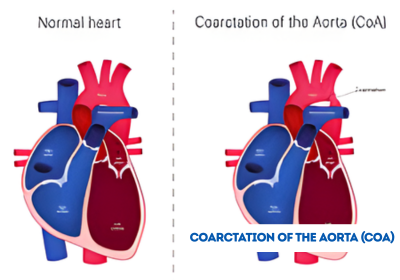
Coarctation of the aorta (CoA) is a congenital heart defect where the aorta narrows, restricting blood flow from the heart to the body. It may occur alone or with other defects like VSD, PDA, or bicuspid aortic valve. Untreated CoA can lead to high blood pressure, heart failure, aortic rupture, stroke, or early coronary artery disease. EdhaCare assists international patients seeking Coarctation of the aorta surgery in India, Turkey, Thailand, Dubai, and other countries by connecting them with experienced doctors and NABH- or JCI-accredited hospitals, offering professional consultation, tailored treatment planning, and structured post-treatment care.
[Book Consultation & Get Treatment Quote – India | Turkey | Thailand | Dubai]
The cost of treatment for coarctation of the aorta varies depending on the hospital, type of procedure (surgical repair or catheter-based intervention), patient condition, and surgeon expertise. Below are approximate costs for coarctation of the aorta treatment in India, Turkey, Thailand, and Dubai:
| Country | Approximate Cost |
|---|---|
| India | USD 8,000 – 25,000 |
| Turkey | USD 15,000 – 35,000 |
| Thailand | USD 20,000 – 40,000 |
| Dubai | USD 30,000 – 60,000 |
Note: The above costs of coarctation of the aorta treatment are only estimates. Reach out to EdhaCare for the exact coarctation of the aorta treatment cost and personalized treatment guidance.
EdhaCare guides global patients to the best hospitals in India for coarctation of the aorta, ensuring access to the top hospitals for coarctation of the aorta in India with advanced pediatric cardiology technologies, expert care, and internationally recognized treatment standards.
| Hospital Name | Location |
|---|---|
| MGM Healthcare | Chennai |
| Fortis Escorts Heart Institute | Delhi |
| Medanta Hospital | Gurgaon |
| Rainbow Children's Hospital | Hyderabad |
| BM Birla Hospital | Kolkata |
Meet the top doctors in India for coarctation of the aorta through EdhaCare. These best doctors for coarctation of the aorta in India provide personalized, expert care with international patient support and high safety standards.
| Doctor Name | Hospital Name | Location |
|---|---|---|
| Dr. Ajit Desai | Jaslok | Mumbai |
| Dr. Smita Mishra | Manipal | Delhi |
| Dr. Aseem Ranjan Srivastava | Artemis | Gurugram |
| Dr. Nageswara Rao Koneti | Rainbow | Hyderabad |
| Dr. Sushil Shukla | Asian | Faridabad |
You may be diagnosed with coarctation of the aorta in infancy, childhood, or adulthood, depending on how significant the narrowing is.
Indications for treatment would include:
In some instances of critically ill neonates, the infusion of prostaglandin E1 may be used to keep the ductus arteriosus open and allow for blood flow until the definitive surgical procedure can be performed.
Surgical or catheter-based therapy is the treatment of choice for CoA, depending on the patient's age, degree of narrowing, and associated heart disease.
This is the traditional method and the best option for infants and small children, as it involves removing the coarctation segment of the aorta and connecting the healthy ends of the aorta (end-to-end anastomosis).
Using a flap of the left subclavian artery to expand the narrowed aortic segment.
Using either a synthetic or biological patch to widen the narrowed portion of the aorta. This option is generally not as desirable due to the high risk of residual narrowing or formation of an aneurysm.
This is a low-risk, minimally invasive procedure to dilate the narrowed area of the aorta using a balloon catheter. This procedure is mostly used in older children and adults.
This is a procedure that places a metal stent to keep the aorta open after balloon angioplasty. This procedure is now the treatment of choice for adolescents and adults.
Accurate diagnosis and assessment must be carried out before planning any treatment for CoA. Diagnostic evaluations include:
The presence of associated congenital defects, the function of the heart, and extra vessels that circulate blood are used to characterize the patient during the assessment for treatment.
Selection and Surgical Planning
Deciding between surgical and catheter treatment will depend on these questions.
Surgical Planning
Catheter Planning
A pediatric cardiologist, a cardiothoracic surgeon, and an interventional cardiologist form a multidisciplinary team to ensure an optimal outcome in surgery or catheter-based treatment.
Surgical Repair
Balloon Angioplasty (With or Without Stenting):
Most complications can be effectively managed with proper technique and post-procedural care.
Here are the expectations after the treatment.
Post-Surgical Recovery
Post-Angioplasty Recovery
Long-Term Monitoring
Long-term care is essential to ensure lasting success and early detection of potential complications.
Most children and adults treated for coarctation of the aorta can lead healthy, active lives with proper follow-up care.
India’s leading pediatric cardiac centers report excellent outcomes for CoA treatment.
Timely intervention and appropriate follow-up contribute significantly to favorable long-term outcomes.
India is widely recognized for its affordable, high-quality cardiac care, especially for complex congenital heart defects like CoA.
Top hospitals like Apollo Hospitals, Fortis Escorts Heart Institute, and Medanta - The Medicity are internationally acclaimed for congenital heart surgery and interventional cardiology.
For international patients looking for CoA treatment in India, it is necessary to present certain documentation to have a smooth medical journey. These include:
It is advisable to refer to the Indian consulate or your medical facilitator for the latest information and help with documentation.
Can coarctation of the aorta be completely cured?
Yes, timely surgical or catheter-based treatment can fully correct the defect, although lifelong follow-up is necessary.
What are the signs of coarctation of the aorta?
Common signs include high blood pressure in the arms, weak pulses in the legs, and, in infants, difficulty feeding, rapid breathing, or failure to thrive.
Is balloon angioplasty as effective as surgery?
Balloon angioplasty is highly effective in older children and adults. In neonates and infants, surgery is often the preferred option.
Will my child need another procedure later in life?
Some patients may experience re-narrowing or require additional interventions, but many remain symptom-free with good follow-up.
Can adults with untreated CoA still have surgery?
Yes, adults can undergo balloon angioplasty or surgical repair, but early treatment generally offers better outcomes.

A Medical Visa to India allows international patients to travel to India for medical treatment at re...

Lung cancer life expectancy remains one of the biggest concerns after a diagnosis. Patients and fami...
Gender Reassignment Surgery in India is increasingly considered by international patients looking fo...